The Challenge
Early childhood educators face unprecedented levels of burnout while simultaneously supporting children experiencing trauma and adversity. Organizations needed a scalable, evidence-based professional development program that could reduce educator stress while improving outcomes for children, all delivered in a remote-first environment to reach educators nationwide. The challenge was creating engaging, research-backed content that would drive measurable behavior change and demonstrate clear impact to stakeholders and funders.
My Role
I served as co-designer, evaluation lead, and LMS architect for this comprehensive learning initiative. My responsibilities spanned the full learning lifecycle:
- Instructional Design: Collaborated with subject matter experts to develop curriculum while personally creating substantial content, including interactive Storyline elements, scenario-based learning, game mechanics, and digital assessments
- Research Integration: Wove evidence-based research throughout modules to support teaching points and ensure content credibility
- LMS Selection & Implementation: Conducted comprehensive research and evaluation of six learning management systems, creating mockups and facilitating stakeholder trials before recommending and implementing Docebo as the optimal platform for organizational needs
- LMS Architecture: Led platform configuration and structure design, establishing scalable workflows and technical infrastructure supporting 2,500+ users
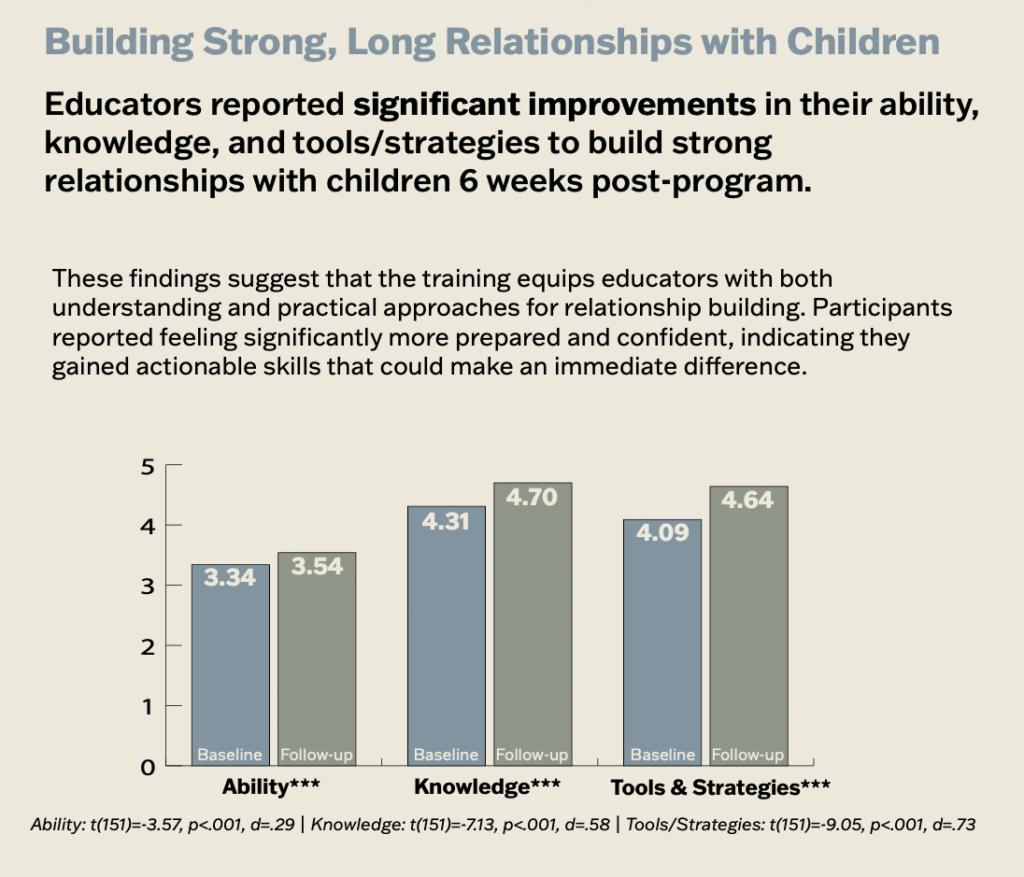
- Evaluation Framework: Designed a comprehensive evaluation methodology using validated instruments (Maslach Burnout Inventory, Student-Teacher Relationship Scale, Flourishing Scale)
- Data Systems: Built an integrated technology ecosystem connecting a learning platform, survey tools, and Salesforce for seamless data flow
- Content Development: Contributed to program planning beginning January 2022, then led asynchronous content build from February to June 2023, personally creating 10+ interactive Storyline elements, including scenario-based learning, game mechanics, digital assessments, and multimedia resources for the e-learning modules
Approach
Applied human-centered design principles and ADDIE methodology:
Analysis
Conducted stakeholder interviews and a comprehensive literature review on trauma-informed practices and educator wellbeing to identify learning needs and evidence-based approaches.
Design
Developed learning objectives aligned to behavioral outcomes; created a blended learning model combining synchronous virtual instructor-led training with asynchronous e-learning modules; designed a competency-based assessment framework.
Development
Built interactive e-learning modules in Articulate Storyline featuring scenario-based learning, game mechanics, knowledge checks, and multimedia content; integrated research citations and evidence-based practices throughout; created assessment instruments and evaluation tools.
Implementation
Launched program in Docebo LMS with integrated feedback mechanisms; established enrollment workflows and learner support systems; trained facilitators and program staff.
Evaluation
Designed pre/post assessment methodology with 6-week follow-up; analyzed data using statistical methods, including paired t-tests and effect size calculations; created reporting dashboards; iterated based on findings to drive continuous improvement.
Deliverables
Learning Content:
- 18-hour comprehensive blended learning program
- 10+ asynchronous e-learning modules
- 1 blended learning cohort experience
- Interactive Storyline elements, including scenarios, games, and assessments
Evaluation & Analytics:
- Comprehensive evaluation framework and methodology
- Validated assessment instruments (pre/post/follow-up)
- Data collection and analysis protocols
- KPI dashboards tracking completion, engagement, and outcomes
- Quarterly evaluation reports for stakeholders
Infrastructure:
- Docebo LMS platform configuration and workflows
- Integrated technology ecosystem (LMS, SurveyMonkey, Salesforce)
- Standard operating procedures for program delivery
- Quality assurance protocols supporting IACET accreditation
Professional Outputs:
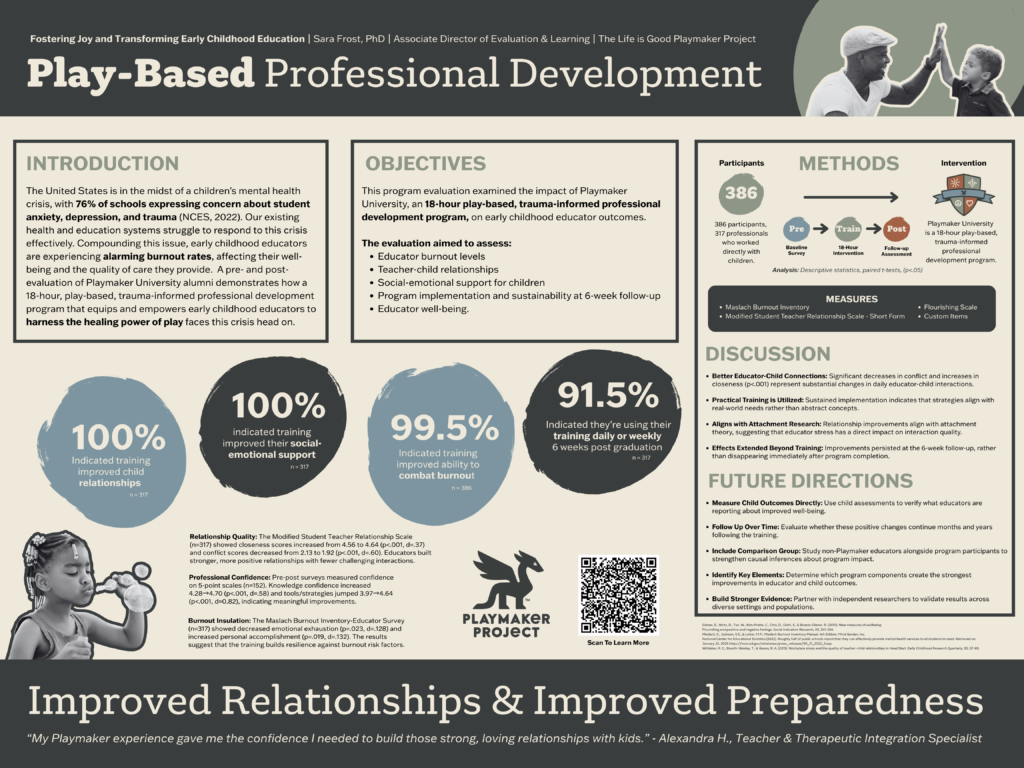
- Conference poster presentation showcasing evaluation results
- Marketing materials and program documentation
- Research-backed curriculum resources
Impact
Program Reach:
- 2,500+ educators trained and 1,000+ Graduates
- National reach serving diverse early childhood settings
- Scalable model enabling organizational growth
Learner Outcomes (386 participants evaluated):
- 99.5% reported reduced burnout symptoms (Maslach Burnout Inventory)
- 100% reported improved relationships with children (Student-Teacher Relationship Scale)
- 100% positive program impact ratings
- 50.2% reported transformative changes in professional practice
- Outcomes sustained at 6-week follow-up, demonstrating lasting impact
Operational Excellence:
- 25.3% completion rate improvement through data-driven instructional design iterations
- IACET Accredited Provider status achieved, validating program quality and rigor
- Evidence-based supporting grant funding and organizational growth
- Scalable infrastructure enabling expansion to new audiences
Business Value:
- Demonstrated measurable ROI through rigorous evaluation
- Enhanced organizational credibility and market positioning
- Created a replicable model for future program development
- Established quality standards adopted organization-wide